
Ask a New Zealand GP where the leading edge of pain medicine is, and many will point, without hesitating, to the United States. American journals, American conferences, American guidelines. The assumption sits underneath a great deal of clinical practice here: that American medicine is ahead, and that New Zealand’s job is to catch up.
This assumption deserves to be examined rather than inherited. The United States does not have a neutral, advanced pain science that New Zealand is merely slow to adopt. It has a pain science shaped, at every level, by an insurance driven healthcare market, a pharmaceutical industry with direct financial interest in prescribing patterns, and a decades long domestic fight over drugs, addiction, and who is allowed access to relief. New Zealand has spent thirty years importing the outputs of that fight, the diagnostic frameworks, the prescribing caution, the self management doctrine, while importing almost none of the context that produced them. The result is a set of clinical beliefs that New Zealand doctors treat as settled science, when much of it is the residue of an American argument that has never actually been settled, and was never about New Zealand patients in the first place.
Two American exports, pulling in opposite directions
The United States has not sent New Zealand one coherent message about pain. It has sent two, at different times, from different interests, and New Zealand has absorbed both without noticing they contradict each other.
The first wave was permissive. Through the 1990s and into the 2000s, American pharmaceutical companies marketed opioid medications aggressively to prescribers, funding continuing education, sponsoring pain societies, and promoting the claim that the risk of addiction in patients with genuine pain was minimal. This was not disinterested science. It was a commercial campaign, and it is now well documented as one, including through litigation and settlements against manufacturers whose internal marketing practices came to light in the process. The result in the United States was a surge in prescribing that fed directly into a public health crisis of dependence and overdose deaths on a scale New Zealand never approached.
The second wave was the correction, and it was just as political as the first. Once the scale of the opioid crisis became undeniable, American medicine swung hard toward restriction: tightened prescribing guidelines, physician fear of regulatory scrutiny, and a cultural shift toward treating any request for pain relief as a potential sign of drug seeking behaviour. This backlash was shaped as much by litigation risk, insurer policy, and law enforcement pressure as by patient need.
New Zealand imported flavours of both waves without the machinery that produced either. Our doctors were never the target of the marketing budgets that drove the first wave, and our system does not carry the same litigation exposure or law enforcement entanglement that drove the second. Yet the caution, the suspicion of patients requesting pain relief, and the assumption that firm limits on medication are simply good medicine, arrived here anyway, treated as clinical wisdom rather than as the downstream residue of an American fight over liability and addiction that New Zealand was never actually part of.
Whose research, and what happened to the trials that failed
A large share of the pain and opioid research literature New Zealand clinicians rely on originates from industry funded studies. This is not a fringe concern. Industry sponsorship of clinical research is associated, across multiple fields of medicine, with a higher likelihood of results favourable to the sponsor’s product, and with a pattern in which trials producing unfavourable or inconclusive results are less likely to be published at all. A treatment’s apparent evidence base can look stronger than it is, not because the science was faked, but because the failures were simply never written up.
New Zealand does not have the scale or funding to generate its own independent pain research at anything like the volume the United States produces. That leaves New Zealand clinicians heavily reliant on literature shaped by American commercial interests, without always being positioned to ask the harder question underneath it: who funded this study, and what would we not have seen if the result had gone the other way.
A different ecosystem, not a more advanced one
The deeper problem is that American pain medicine operates inside an ecosystem that has almost nothing in common with New Zealand’s.
In the United States, whether a patient can access a particular treatment, a specialist, or an extended course of physiotherapy is determined largely by what their insurer will authorise and pay for. Clinical guidelines are written inside a system where insurer policy, liability exposure, and disability determination processes exert constant pressure on what counts as appropriate care. A guideline that emerges from that environment is not a pure statement of what helps patients. It is, in part, a document shaped by what a fragmented, profit driven insurance market will tolerate.
New Zealand’s system was built on entirely different assumptions. ACC’s no fault model and the public health system mean that, in principle, the same population that bears the cost of poor health outcomes is also the population the system is meant to serve. There is no insurer standing between the New Zealand government and the long term cost of its own citizens’ unmanaged pain. A small country with a single public system has a direct and immediate stake in whether its population recovers, in a way a large country with a fragmented, competitive insurance market structurally does not.
This is not a small difference. It means a guideline developed to manage insurer liability in the United States is answering a question New Zealand’s system does not have. Treating that guideline as simply more advanced science, rather than as the answer to a different country’s different problem, is a category error, and one New Zealand medicine makes often.
Where New Zealand’s own instincts came from
New Zealand’s public health tradition has its own lineage, and it is not American. The Social Security Act of 1938 established compulsory, government funded health and welfare provisions years before Britain’s National Health Service existed, drawing on a British and colonial administrative tradition that treated health as a collective, state supported responsibility rather than a private, insurer mediated transaction.
That inheritance matters, because it means New Zealand does not need to borrow its underlying values from the United States at all. It already has an institutional tradition built on the premise that the state has a direct stake in the health of its population. What has been imported from America since is not a value system New Zealand lacked. It is a set of clinical practices developed to manage a value system, insurer driven, litigation exposed, individually accountable, that New Zealand never adopted and does not need.
The question worth asking of every imported idea
None of this means American research or American clinicians have nothing to offer. It means New Zealand medicine needs to stop treating American origin as a proxy for quality, and start asking, of every imported framework, guideline, or attitude toward pain: whose interests did this serve where it was built, and do those interests have anything to do with the people it is now being applied to here.
That question should be asked with particular seriousness where Te Tiriti o Waitangi obligations are concerned. An imported idea that was never built with Māori health equity in mind, that emerged instead from an insurance market and a domestic drug policy fight in another country, cannot be assumed to serve those obligations simply because it arrives dressed in the language of evidence and best practice. The relevant test is not where an idea came from, or how confidently it is delivered. It is whether it serves the health of the people now living under it, or the interests of the system that built it somewhere else.
A country whose own population suffers some of the worst health outcomes in the developed world, despite spending more on healthcare than almost anyone else, is not self evidently the country New Zealand should be taking its cues from. That New Zealand so often does, without asking why, is itself part of the history this hub is trying to make visible.
The pieces that follow this one look at specific parts of this history in more depth: how ACC’s own structure has shaped pain assessment in practice, who benefits from framing chronic pain as a matter of self management, and how gender, Māori health, and disability law intersect with all of the above.

Why the Biopsychosocial Model Fails Pain Patients — and What Te Whare Tapa Whā Offers Instead
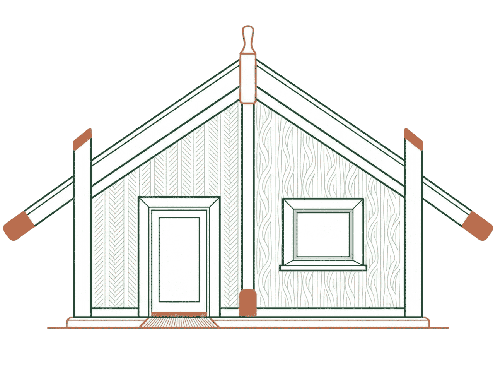
Te Whare Tapa Whā and pain: a whole-health lens