Believing patients is not enough. The system has to change.
Every story and article on this site point to the same conclusion: the way pain patients are disbelieved in Aotearoa is not a series of individual failures. It is a predictable output of how doctors are trained, how consults are timed, how ACC assesses claims, and how complaints disappear once they’re filed. This section is about what has to change to fix it.
The mechanism behind pain bias is the same for every patient who walks into a clinic: a credibility gap between what you report and what a clinician is willing to act on. But that mechanism does not land the same way for everyone. It compounds for wāhine, for Māori, for anyone whose pain doesn’t fit a scan. So the reforms below sit in two categories. Some are structural fixes that would improve the system for every pain patient in the country. Others are Māori-led and Tiriti-based, not because Māori experience “more” of a shared problem, but because Māori are entitled to health care that is self-determined.
A note on standard: this hub holds itself to a higher evidentiary bar than the rest of the site. The pain bias hub describes what is happening and why: it’s evergreen, and the case for it is made elsewhere in the literature. This hub argues for what should happen next, and that’s a different kind of claim. Where the evidence for a specific reform is strong, we say so. Where it’s mixed, thin, or where we’re still tracking down a primary source, we say that too. We are not interested in promising fixes we can’t back up.
Workforce and training
Pain-specific implicit bias training for health care workers. Generic bias training has a mixed track record. Recent systematic reviews have found little evidence that awareness-only training changes long-term clinician behaviour, and some evidence that raising awareness without giving concrete alternative strategies can backfire, producing shorter visits or performative over-compensation instead of better care. A workshop built specifically around how pain testimony gets discounted, paired with concrete alternative scripts for uncertain presentations, is a more defensible version of this proposal. We treat this as evidence-informed rather than evidence-proven, and we say so.
Curriculum reform at the medical school level. Bias training after the fact treats a symptom. The credibility discount pain patients face is taught early, in how diagnostic uncertainty is modelled to students before they ever see a patient. Building pain-testimony credibility into undergraduate medical training, rather than leaving it to continuing education years into a career, is a slower reform but a more durable one.
Standardised language training for diagnostic uncertainty. Clinicians are rarely taught to distinguish, out loud or on the page, between “I don’t know what’s causing this” and “this isn’t real.” The first is honest. The second is what patients hear, and what often ends up in their notes. Training clinicians to name their own uncertainty without translating it into disbelief is a narrow, teachable skill.
Clinical process and documentation
Mandatory pain-history documentation standards. Right now, what a patient actually says is routinely replaced in the clinical record by the clinician’s interpretation of it. A requirement to document reported symptoms in the patient’s own terms, before clinical interpretation, keeps the patient’s testimony in their own file and available to the next clinician, and to any future review.
A structured second-opinion pathway. When pain is labelled “unexplained” or attributed to psychological cause after a single consult, the burden of pursuing a second opinion currently falls entirely on the patient, the person least equipped, mid-crisis, to fight for it. A formal pathway, triggered automatically rather than requested, shifts that burden back onto the system.
Consult time reform for chronic pain presentations. The standard fifteen-minute GP consult is not long enough to build the kind of trust and history-taking that complex, unexplained pain requires. This is the most structurally difficult reform on this list. It is a funding and workforce question, not just a clinical one.
ACC-specific
Reform of ACC’s injury-cover framing for pain without a clear index event. Claims tied to a discrete, documented injury are treated differently, more credibly, than pain conditions that develop or persist without one. This structurally disadvantages exactly the patients most likely to already be facing a credibility gap in the clinic.
An independent pain-specific review tier in the ACC appeals process. Pain claims raise different evidentiary questions than a torn ligament or a broken bone. A review tier with the expertise to actually weigh those questions, separate from general injury appeals, would reduce how often pain claims get assessed against a standard built for a different kind of injury.
Patient rights and accountability
Complaint-pattern review at the institutional level. The HDC and Code of Rights pathway already gives individual patients a route to redress, but repeated complaints on the same theme, at the same practice or facility, currently trigger no automatic institutional review. A pattern of complaints should prompt scrutiny of the system, not just resolution of the individual case.
Routine data collection on pain-dismissal experiences. Patient safety incidents are tracked at a national level. Pain dismissal isn’t tracked anywhere. Without data, this remains anecdote no matter how consistent the anecdotes are. Routine, structured collection, even self-reported, would make the pattern visible in a way the system can’t wave away.
Published wait-time and referral-outcome data for unexplained pain presentations. Making it visible, in official figures, that patients without imaging-confirmed causes wait longer and get referred less often would turn a lived experience into a public accountability question.
Māori-led and Tiriti-based
Māori health principles informing pain management for all patients. Te Whare Tapa Whā addresses dimensions of wellbeing — whānau, wairua, hinengaro, tinana — that the dominant biomedical model doesn’t ask about for anyone, Māori or not. Bringing this framework into mainstream pain care as a standard, not an optional cultural add-on, would benefit every patient it reaches.
Implementation of published recommendations on Māori patients’ preferences for pain care. This is a self-determination claim, not an efficiency argument: Māori are entitled to care designed by and for Māori, independent of whether it also happens to help others.
This hub will grow as each reform is developed into its own page, with full citations and a clear account of the evidence behind it. If you have expertise, lived experience, or research that speaks to any of the above, contact us.
Why the Biopsychosocial Model Fails Pain Patients — and What Te Whare Tapa Whā Offers Instead
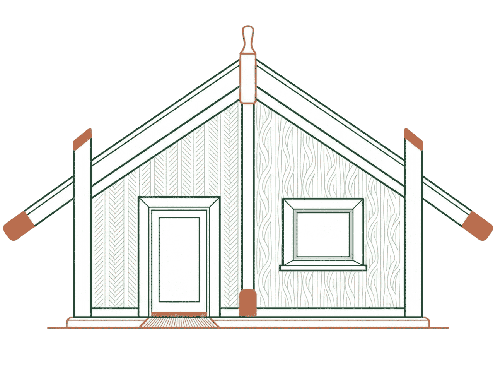
Te Whare Tapa Whā and pain: a whole-health lens