
The GP looks at the scan results, then back at you. “Everything’s structurally normal,” she says, not unkindly. “Which is actually good news. It means we can move forward with evidence-based pain management.” She’s already reaching for the referral form. “I’m going to get you a referral to psychiatry. They do fantastic work with the biopsychosocial approach.”
You ask about the pain itself. Whether there’s anything else to check. Whether “structurally normal” might mean the test wasn’t sensitive enough, or looked in the wrong place.
“That’s kind of the point,” she says. “We don’t want to over-medicalise this. The biopsychosocial model tells us pain is about more than the body.”
You leave with a referral to a psychiatrist and no further investigation booked. Nobody has said the pain isn’t real. But somehow, the more the model has been invoked, the less anyone seems to be looking.
If this scene feels familiar, it’s not because biopsychosocial care is inherently a psychiatric handoff. It’s because, in practice, that’s what “biopsychosocial” has come to mean for a lot of pain patients in this country, and understanding how that happened means looking at the model’s history, who gets to produce “evidence” about it, and what gets lost when we don’t ask what else might have worked.
A model built to open doors, used to close them
The biopsychosocial model comes from a 1977 paper by psychiatrist George Engel published in Science. Engel argued that the dominant biomedical model of disease left no room for the social, psychological, and behavioural dimensions of illness , and proposed something broader in its place. His target wasn’t pain patients specifically; he was pushing back against a biomedical model he saw as insufficient on its own, and hoping to build, in his words, a blueprint for research, a framework for teaching, and a design for real-world care.
That’s a generous, integrative starting point. It does not say: stop looking for physical causes. It does not say: treat unexplained pain as primarily a mental health problem. It says biology, psychology, and social context all matter, together, for everyone.
What happened next is where things went wrong for pain patients. Since its publication, the model has been extensively interpreted, misinterpreted, used, and, as more than one clinician has put it, abused and co-opted. In pain medicine specifically, “biopsychosocial” has often stopped meaning all three domains, considered together and started meaning once we’ve ruled out an obvious structural finding, the psychological and social domains are what’s left to treat. The referral in that GP’s office isn’t biopsychosocial care. It’s biomedical care that quietly gave up, wearing biopsychosocial language as a coat.
This drift didn’t happen by accident. It happened because the psychological and social components of the model were far easier to operationalise, fund, and measure than the biological ones, especially for pain conditions where imaging and bloodwork come back clean. Which brings us to the evidence problem.
Why there’s so much “evidence” for one model and so little for the other
Ask a clinician why biopsychosocial pain management is “evidence-based” and you’ll usually get a straight answer: there are decades of randomised controlled trials behind cognitive behavioural approaches to pain, stacks of systematic reviews, entire journals built around the framework. That evidence exists. It isn’t fabricated.
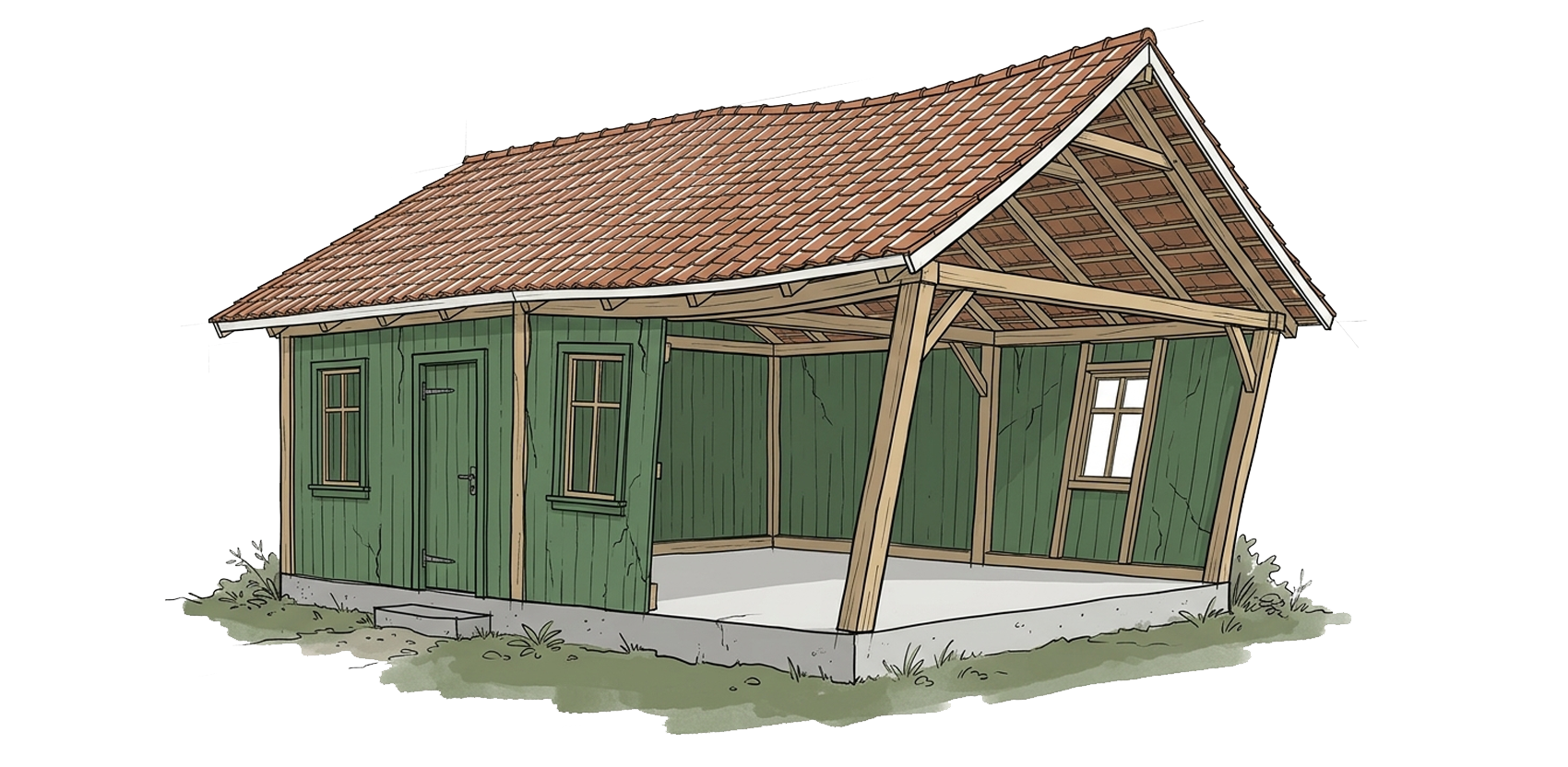
But evidence doesn’t accumulate in a vacuum. It accumulates where funding bodies, universities, and publishers decide to point resources, and those institutions have, for the better part of a century, been shaped by Western biomedical and psychological paradigms that treat the individual, rather than the whānau or community, as the natural unit of study. A randomised controlled trial is a good tool for testing whether a manualised, individually-delivered intervention changes a measurable outcome. It is a much worse tool for testing something like Te Whare Tapa Whā, a model whose logic is relational and cumulative rather than mechanistic: a house standing on four walls, not a variable you isolate and manipulate.
This is a version of what philosophers Ian James Kidd and Havi Carel call epistemic injustice: a system where certain kinds of knowledge get treated as inherently more credible, not because they’re truer, but because they arrive in a form the system already knows how to recognise. Indigenous health frameworks are frequently asked to prove themselves using research methods built to validate something else entirely, then criticised for lacking the kind of evidence those methods produce. The absence of RCTs (randomised controlled trials) behind Te Whare Tapa Whā tells you about research funding priorities and methodological fit. It tells you nothing about whether the model helps people.
Meanwhile, the volume of biopsychosocial pain literature has itself become part of the problem. A large evidence base makes it easy for a clinician to feel confident invoking “the biopsychosocial approach” as a diagnosis-adjacent decision, when in practice, what’s supported by that evidence is much narrower, that psychological and social factors influence how pain is experienced and managed, not that they are the primary driver, and not that a psychology referral is what every patient with unexplained pain needs next.
How the model gets used to close the file
For a lot of chronic pain patients, particularly women, particularly people with conditions medicine still struggles to see clearly, the practical effect of a biopsychosocial framing is this: once “no structural cause found” enters the notes, the clinical gaze shifts almost entirely to the psychological. Referrals go to psychiatry, psychology, or pain psychology services. Further physical investigation stalls. Distress about ongoing, unexplained pain — a normal response to a frightening, disorienting situation — gets read back as evidence that the pain was more psychological than medical to begin with.
In New Zealand, the ACC system adds another layer. Because the scheme distinguishes between accident-related injury and other causes, clinicians assessing pain that doesn’t map cleanly onto a specific event have institutional incentive to look for psychosocial contributors, sometimes explicitly framed around secondary gain, a concept with a long and troubled history of being applied more readily to patients whose pain is harder to verify objectively. A biopsychosocial framing can, in that context, function less as holistic care and more as a mechanism for shifting a patient off one funding pathway and onto another, or off the books altogether.
None of this means psychological and social support are unhelpful. Distress deserves care. But when “biopsychosocial” becomes the label attached to stopping medical investigation rather than broadening it, the model has been inverted from what Engel proposed. That inversion is what patients are describing when they say they’ve been told their pain is “in their head,” even though no clinician used that phrase.
What Te Whare Tapa Whā does differently
Te Whare Tapa Whā, developed by Sir Mason Durie in 1984, offers a fundamentally different starting architecture. It describes health as a wharenui, a meeting house, with four walls: taha wairua, spiritual wellbeing; taha hinengaro, mental and emotional wellbeing; taha tinana, physical wellbeing; and taha whānau, family and social wellbeing. It grew directly out of research into structural racism and systemic gaps in the Western health model affecting Māori, work done by the Māori Women’s Welfare League in the late 1970s that documented the human cost of a health system that wasn’t built around them.
The structural difference matters more than it might first appear. In the biopsychosocial model as it’s typically practiced, the biological, psychological, and social domains are treated as separable and, in effect, ranked: biological first, then, if that comes up empty, psychological, with social often an afterthought. In Te Whare Tapa Whā, the four walls are structurally interdependent: a wharenui doesn’t stand on three walls while the fourth is assessed for relevance. Weakness in one dimension is understood as necessarily affecting the others, without any wall being treated as the default explanation of last resort. Pain isn’t sorted into “real” (biological) or “not quite real” (psychological); it’s read across the whole structure at once, spiritual and relational dimensions included, without needing to first exhaust and rule out the physical.
That’s a model built for exactly the situation the opening GP’s office got wrong: a patient whose pain doesn’t reduce to a single measurable tissue finding, without treating that irreducibility as grounds for suspicion.
See this further discussion of Māori understanding of pain.
The problem with offering it only to Māori
Here’s where good intentions can still produce an unjust outcome. Some services, aware of the harm the biomedical-turned-psychiatric pipeline does to Māori patients – and aware of Aotearoa’s obligations under Te Tiriti o Waitangi – have started offering Te Whare Tapa Whā-informed care specifically within kaupapa Māori health services, while leaving mainstream, non-Māori-facing pain services running on an unreformed biopsychosocial model.
On its face, this looks responsive. In practice, it creates a two-tier system with a troubling logic underneath it: that holistic, relational, non-psychiatrising care is a cultural accommodation for Māori patients, while the “real,” universal, evidence-based model remains the biopsychosocial one for everyone else. That framing quietly re-entrenches the exact epistemic hierarchy the shift was meant to correct. It treats Māori knowledge as valid for Māori, rather than as a health framework that might simply be better, full stop, for a population of patients whose pain the current model keeps mismanaging regardless of ethnicity.
It also underserves everyone. Pākehā, Pasifika, and other non-Māori patients experience the same pattern the opening anecdote describes – the same slide from “no structural cause found” into referral-as-dismissal – and a model confined to Māori-specific services offers them no alternative pathway at all. Meanwhile Māori patients already face documented disparities in pain assessment, treatment access, and being believed; routing them toward a separate model, however well-designed, without also addressing why the mainstream model fails them in the first place, leaves the disparity-producing system itself untouched.
Te Tiriti o Waitangi’s partnership principle points toward something different: not a Māori pathway running alongside an unreformed mainstream one, but Māori frameworks shaping how care is delivered system-wide, because they were built to do a job the imported model has consistently failed at. Health disparities for Māori in this country are well documented and won’t be resolved by better care sitting in a service most patients never enter. They need the default model to change.
Where this leaves patients
If you’ve been on the receiving end of a “biopsychosocial” referral that felt more like a door closing than a picture widening, the problem was very likely not you. It was a model that started out asking clinicians to look at more, and has too often ended up giving them a well-evidenced reason to look at less. A model like Te Whare Tapa Whā, built around the idea that no single wall of a person’s wellbeing explains the whole house, offers a fundamentally different way of listening, and it shouldn’t be rationed to one part of the population while the rest of us keep getting handed the same referral form.