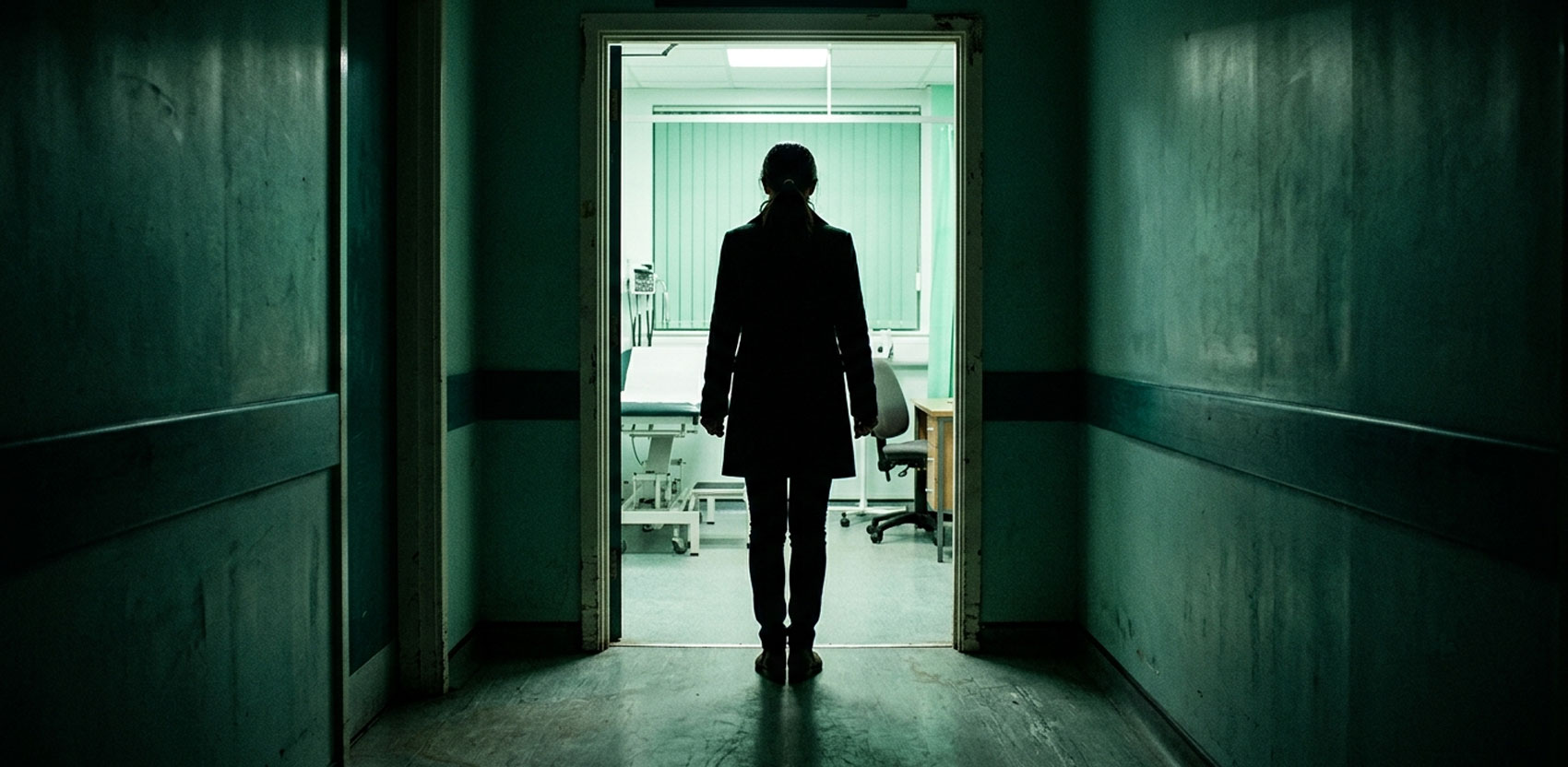

There is a particular kind of exhaustion that comes not from pain itself, but from having to justify it. From learning slowly, through repeated encounters with scepticism, to preface every description of your own body with apology. To frame suffering as a question rather than a statement. To wonder, before you have even spoken, whether you will be believed.
For many women, this is not an occasional experience. It is the texture of navigating healthcare with pain.
The research bears this out with uncomfortable consistency. Women wait longer in emergency departments to receive pain medication. They are more likely to be offered sedatives or antidepressants when they present with pain, rather than analgesics. Their pain is more frequently attributed to psychological causes. And they are significantly more likely to leave clinical encounters without an explanation, a diagnosis, or a clear path forward.
This is not incidental. It is a pattern, and it has a name.
What the evidence shows
In 2001, researchers Diane Hoffmann and Anita Tarzian published a paper that named the problem directly. Titled “The Girl Who Cried Pain,” it reviewed the existing literature on gender and pain treatment and found that women’s pain was systematically underestimated and undertreated compared to men’s, even when they reported equivalent levels of pain. Women were more likely to have their pain characterised as emotional or psychogenic in origin. They were more likely to be told their symptoms were stress-related. And they were less likely to receive the same standard of analgesic care.
More than two decades later, this finding has not been substantially overturned. What has changed is our understanding of why it happens.
A 2018 systematic literature review by Samulowitz and colleagues, examining gender bias and chronic pain across healthcare settings, identified a pervasive cultural script: men who reported pain were seen as stoic and credible; women who reported the same pain were seen as emotional and over-reactive. The researchers framed this as gendered norming: social expectations about how men and women respond to pain that directly shape clinical interpretation. A man’s description of pain reads as reliable data, while a woman’s description reads as affect.
This is not simply about individual clinician prejudice. It is structural. It is baked into diagnostic frameworks, research methodologies, and the long cultural history of medicine’s relationship with women’s bodies.
The history matters
Elinor Cleghorn’s Unwell Women (2021) traces this history with considerable precision. For centuries, unexplained pain in women was filed under the broad, shifting category of hysteria, a diagnosis that was less a clinical observation than a social function. It explained away what medicine could not account for. It kept women’s testimony in its place.
Hysteria no longer exists as a formal diagnosis. But the underlying logic — that women’s pain reports are more likely to reflect emotional dysregulation than physical reality — has not fully left clinical culture. It persists in subtler forms: in the speed with which psychological explanations are reached for, in the way women with persistent pain are often described in notes as “anxious” or “somatising,” in the threshold of credibility that women must clear before their pain is taken seriously.
Maya Dusenbery, in Doing Harm (2018), describes this as a double bind. Medicine has historically excluded women from research, meaning less is known about how many conditions present differently in female bodies. That knowledge gap then becomes a justification for scepticism: if we cannot explain it, it may not be real. Women are doubted partly because the science that could validate them was never done.
Epistemic injustice in the clinic
Philosophers Kidd and Carel have developed a particularly useful framework for understanding what happens in these encounters. Drawing on Miranda Fricker’s concept of epistemic injustice, they describe how patients — and women with pain in particular — are subject to testimonial injustice. Their accounts are assigned less credibility than they deserve, based not on the content of what they say but on who they are perceived to be.
In the clinical context, this means that a woman’s pain report is already filtered through a set of assumptions before the clinician has asked a single follow-up question. She is, culturally, the person who over-reports, who catastrophises, who confuses emotional distress with physical sensation. These assumptions are rarely examined. They operate beneath the threshold of conscious decision-making, which makes them particularly difficult to challenge, both for clinicians and for patients.
The result is what Kidd and Carel call epistemic silencing. The patient’s testimony is structurally unable to carry the weight it deserves. No matter how clearly or carefully a woman describes her pain, she is working against an interpretive framework that has already discounted her.
The conditions that carry the heaviest burden
Some diagnoses bear the marks of this pattern more visibly than others.
Endometriosis, a condition in which tissue similar to the uterine lining grows outside the uterus, causing chronic and often severe pelvic pain, is among the most documented examples. In many countries, the average time from first reported symptoms to confirmed diagnosis stretches across years, sometimes more than a decade. Women report being told that their pain is normal, is period pain, is something to manage rather than investigate. The delay is not primarily a technical challenge. It is a credibility gap.
Fibromyalgia, characterised by widespread musculoskeletal pain, fatigue, and cognitive difficulties, disproportionately affects women and has long carried a clinical stigma, frequently described in dismissive terms even by those tasked with treating it. The diagnostic journey is often one of elimination and attrition: patients are referred, tested, and eventually told there is nothing structurally wrong. That framing — structurally wrong, as if structure is the only valid site of pain — itself reflects a narrow conception of what pain is and how it should be evidenced.
Chronic pelvic pain, vulvodynia, interstitial cystitis… the list of conditions that predominantly affect women and that carry disproportionate diagnostic delays shares a common thread. They are conditions in which women’s reported experience of their own bodies was, for a long time, questioned before it was investigated.
Compounding factors
Gender does not operate in isolation. The pattern of dismissal intensifies at the intersection of gender with race, with disability, with class, and with the nature of the diagnosis itself.
For Māori and Pasifika women in Aotearoa New Zealand, the evidence from comparable health systems suggests that race compounds the credibility gap significantly. Cultural stoicism, a value present across many Māori, Pasifika, and Pākehā communities, may mean that by the time a woman presents to a clinical setting, she has already been managing severe pain for longer than her male counterparts. That stoicism is then misread as evidence that her pain is mild. The threshold she had to cross to present at all is invisible to the clinician.
New Zealand’s ACC system introduces additional layers. The distinction between accident-related and gradual-process injury creates a gatekeeping structure that can work against people with persistent or non-acute pain conditions, a category that disproportionately includes women. Secondary-gain assumptions, the sense that patients may be exaggerating for financial or social benefit, follow women with chronic pain through the system in ways that further erode the credibility of their accounts.
What this means
The research does not suggest that all clinicians are consciously biased against women. Most are not. What it suggests is that clinical culture has inherited a set of assumptions about women and pain that are not neutral, and that without active, structural effort to examine them, those assumptions continue to shape care.
Understanding the gendered dimension of pain dismissal is not about blame. It is about accuracy. It is about building a healthcare system that can recognise the difference between a patient who is over-reporting and a system that has systematically under-estimated.
For women reading this who have experienced dismissal: the research is on your side. Your pain was not the problem. The framework used to assess it was.
If your experience of pain has been dismissed or minimised in the healthcare system, you are not alone. We invite you to share your story.
Key references
Hoffmann, D. E., & Tarzian, A. J. (2001). The girl who cried pain: A bias against women in the treatment of pain. Journal of Law, Medicine & Ethics, 29(1), 13–27.
Samulowitz, A., Gremyr, I., Eriksson, E., & Hensing, G. (2018). “Brave men” and “emotional women”: A theory-guided literature review on gender bias in health care and gendered norms towards patients with chronic pain. Pain Research and Management, 2018, Article 6358624.
Kidd, I. J., & Carel, H. (2017). Epistemic injustice and illness. Journal of Applied Philosophy, 34(2), 172–190. [PMID: 28005251]
Dusenbery, M. (2018). Doing harm: The truth about how bad medicine and lazy science leave women dismissed, misdiagnosed, and sick. HarperOne.
Cleghorn, E. (2021). Unwell women: Misdiagnosis, mistreatment, and the long journey towards better healthcare for women. Dutton.