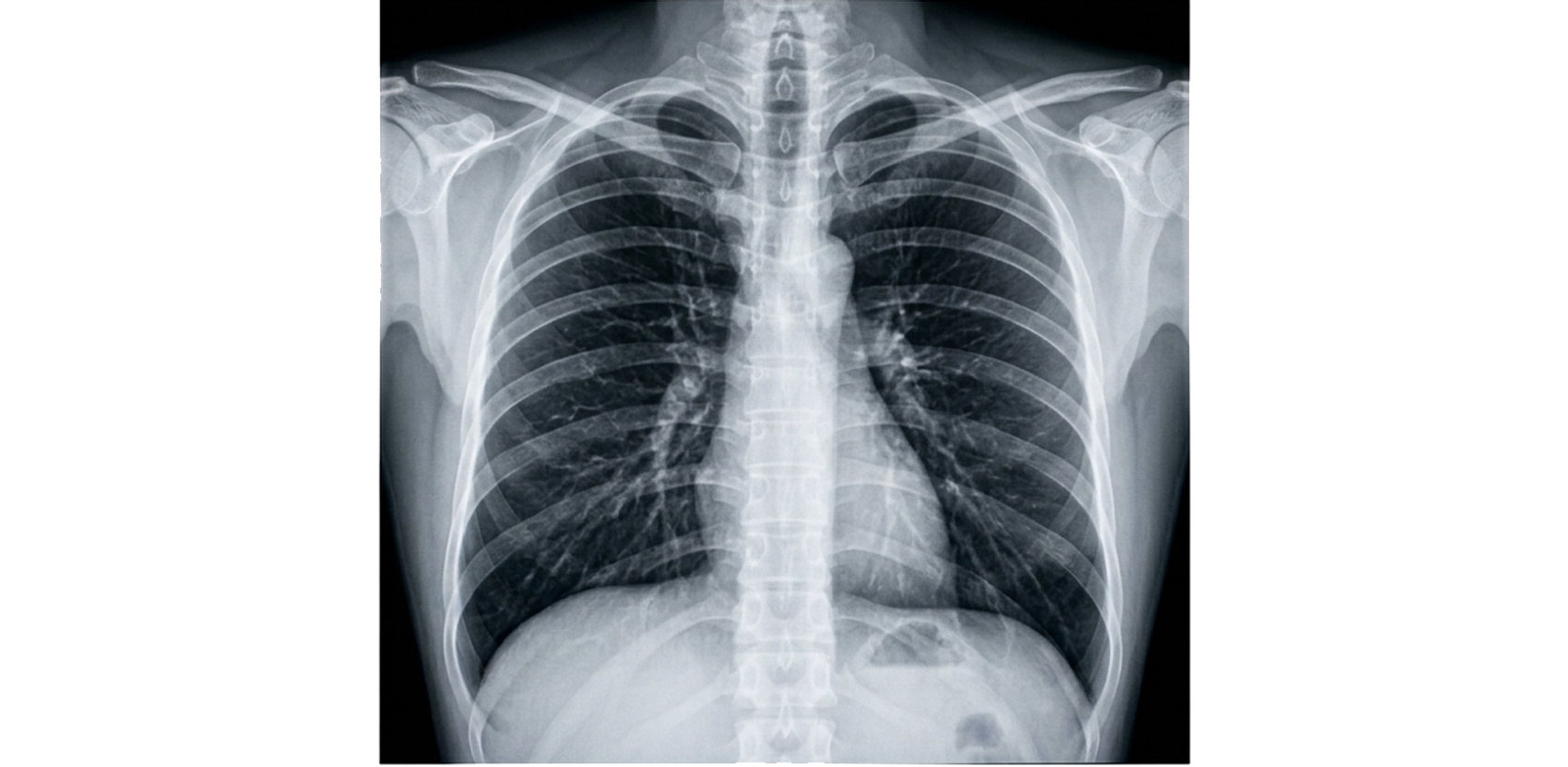

Some harms are believed on sight. Others require proof. A broken bone photographs. It has a shape a doctor can point to, a police officer can log, a friend can see without being told. Trauma researchers have documented something harder to sit with: some survivors of coercive control describe wishing their partner had left a visible mark instead, because it would have given them something the people around them were already trained to believe.
Psychological abuse leaves nothing to point to. It leaves a person trying to explain an injury that has no outline, to systems built to trust outlines.
Pain patients without a diagnosis will recognise this shape of unfairness, even without having lived through the abuse it describes.
The same test, applied to different harms
A broken arm and chronic, unexplained pain can involve comparable suffering. They are not treated the same, because they are not judged by the same standard. One produces something a third party can verify without relying on the sufferer’s word. The other does not. Belief, in both cases, tracks the presence of independent evidence, not the severity of what happened, and not the reliability of the person reporting it.
This is not a coincidence that shows up once, in one clinic, in one context. It is a pattern that researchers working in an entirely separate field identified and named years before anyone applied it to pain.
Evan Stark’s work on coercive control makes the argument directly: the legal and medical systems’ historical failure to recognise psychological and controlling abuse is not a gap that happened by accident. It is a consequence of building the entire concept of “evidence of harm” around what leaves a mark. Absence of physical proof was never a neutral blank in the record. It was, and is, a structural bias in what counts as proof at all, one that was designed around a narrower kind of injury than the one being reported.
Judith Herman’s work on trauma extends the same point: survivors whose injuries resist independent verification are not simply disbelieved by chance. Their credibility is undermined by the same systems meant to protect them, precisely because those systems were not built to evaluate harm that leaves no physical trace.
Neither Stark nor Herman was writing about pain medicine. That is what makes the parallel worth taking seriously rather than dismissing as a rhetorical flourish. Two researchers, working in a different field entirely, independently diagnosed the same design flaw this website has been describing in health care: institutions extend belief in proportion to how verifiable a claim is to a third party, not in proportion to how true it is.
What happens after disbelief: the second move
Failing to believe someone is rarely where the story ends. What Dr Jessica Taylor’s research on victim-blaming adds to this picture is the next step: what happens once physical evidence is absent and belief has already been withheld.
Taylor’s work, including her doctoral research into diagnostic practice in forensic settings, examines a specific and well-documented pattern: women reporting trauma who cannot furnish independent evidence of it are, at a measurably higher rate, given a psychiatric label instead of being believed. A personality disorder diagnosis, in this pattern, does not describe what was done to a person. It redescribes the person as the source of the problem. The account of harm is quietly closed without ever being examined, because the person giving it has now been recast as an unreliable narrator of their own life.
This is the same move the biopsychosocial model makes when it is used as a gatekeeping tool rather than a holistic framework. A patient reports pain with no clear structural cause. Rather than the claim being investigated further, the patient is investigated instead: for anxiety, for depression, for “central sensitisation” used as an explanation rather than a description, for a history that might explain why they would report this. A diagnosis of “somatic symptom disorder” or “functional” pain can perform, almost exactly, the same institutional function as a personality disorder label applied to a trauma survivor: it does not adjudicate the original claim. It relocates the burden of proof onto the person’s psychology, where it can be discussed indefinitely without ever being resolved.
What this is not saying
This comparison is doing one specific piece of work, and it is worth being exact about what that is. It is not claiming that chronic pain is a form of abuse. It is not claiming that pain patients are victims of violence, or that their experience is equivalent in kind or in severity to what survivors of coercive control have lived through. Those are different harms, and collapsing them would do a disservice to both.
What is being borrowed here is narrower and, we think, more useful: the structure of disbelief itself. Two fields, studying two different harms, arrived independently at the same finding: that institutions built to respond to visible injury will systematically fail people whose injury does not present that way, and will often convert that failure into a judgement about the person rather than an acknowledgement of the system’s limits. That structural finding transfers. The harms it is describing do not need to.
Where this lands in Aotearoa
This is not an abstract critique. It has a concrete address here. ACC’s framing of cover around a discrete, documented injury gives a claim built around a clear index event more institutional credibility than a pain condition that developed or persisted without one: the same evidentiary hierarchy Stark describes, applied to compensation rather than belief. A patient whose GP writes “reports chronic pain, no clear structural cause, query psychological component” is not being lied about. They are being processed through a system that, like the ones Stark and Taylor studied, was built to trust what it can verify and grow suspicious of what it cannot.
What visible evidence actually buys someone
The point of naming this structure is not despair. It is precision about what needs to change. A visible injury does not just earn sympathy. It earns faster referral. It earns treatment without a fight. It earns social permission to rest, to say no, to ask for help without first establishing that the need is real. Every one of those outcomes is currently rationed by a test that was never designed to measure whether someone is telling the truth, only whether their body was willing to leave a mark.
The reform question this website keeps returning to is not how to make pain patients more convincing. It is how to build a system that does not require a wound to be visible before it is believed.